Table of Contents
TogglePreschoolers vs. kindergartners, what’s the real difference? Parents often wonder how these two stages compare and what sets them apart developmentally. The gap between a 3-year-old in preschool and a 5-year-old starting kindergarten might seem small, but it represents a significant leap in growth. Children change quickly during these years. Their brains develop, their social skills sharpen, and their bodies gain coordination at a rapid pace. Understanding these developmental differences helps parents make informed decisions about education and support their child’s growth at each stage. This guide breaks down the key distinctions between preschoolers and kindergartners across cognitive, social, emotional, and physical development.
Key Takeaways
- Preschoolers (ages 2–4) learn through play, while kindergartners (ages 5–6) transition to more structured academics like reading and math.
- Cognitive differences between preschoolers vs. kindergartners are significant—attention spans grow from 3–5 minutes to 10–15 minutes.
- Preschoolers engage in parallel play alongside peers, whereas kindergartners participate in cooperative play with shared rules and turn-taking.
- Fine motor skills advance from fist-grip crayon holding in preschool to proper pencil grip and letter writing in kindergarten.
- School readiness depends on individual development—not just age—so some children benefit from an extra year before starting kindergarten.
- Consult preschool teachers and consider readiness assessments to determine the best program fit for your child.
Age Ranges and School Readiness
Preschoolers typically range from ages 2 to 4, while kindergartners are usually 5 to 6 years old. This age distinction matters because it reflects different developmental stages and school readiness levels.
Preschool programs accept children as young as 2 or 3 in many states. These programs focus on play-based learning and basic social interaction. Children at this age are learning to separate from parents, follow simple routines, and engage with peers. They’re not expected to sit still for long periods or complete structured academic tasks.
Kindergarten marks a transition to formal schooling. Most states require children to turn 5 by a specific cutoff date, often September 1, to enroll. Kindergartners face higher expectations: longer school days, more structured activities, and the introduction of reading and math concepts.
School readiness involves more than age. A child ready for kindergarten can typically:
- Follow two-step directions
- Hold a pencil with a proper grip
- Recognize some letters and numbers
- Separate from caregivers without major distress
- Use the bathroom independently
Preschoolers vs. kindergartners differ significantly in these readiness markers. A 3-year-old might struggle with all of these skills, while a 5-year-old has often mastered most of them.
Cognitive and Learning Differences
The cognitive gap between preschoolers and kindergartners is substantial. Brain development during these years happens fast, and each stage brings new capabilities.
Preschoolers learn primarily through play. They explore cause and effect, sort objects by color or shape, and begin to understand basic concepts like “more” and “less.” Their attention spans are short, often just 3 to 5 minutes per activity. They think concretely and struggle with abstract ideas.
Kindergartners show more advanced cognitive skills. They can focus on a single task for 10 to 15 minutes. They begin to understand symbols, which opens the door to reading and math. A kindergartner can recognize that letters represent sounds and that numbers represent quantities.
Here’s how preschoolers vs. kindergartners compare in specific learning areas:
Language Development
Preschoolers speak in 3 to 4 word sentences and have vocabularies of 1,000 to 2,000 words. Kindergartners use complete sentences, tell stories with a beginning, middle, and end, and know 2,000 to 5,000 words.
Pre-Reading Skills
Preschoolers might recognize their own name and a few letters. Kindergartners identify most letters, understand that print carries meaning, and start sounding out simple words.
Math Concepts
Preschoolers count to 10 and recognize basic shapes. Kindergartners count to 100, understand addition and subtraction basics, and compare quantities.
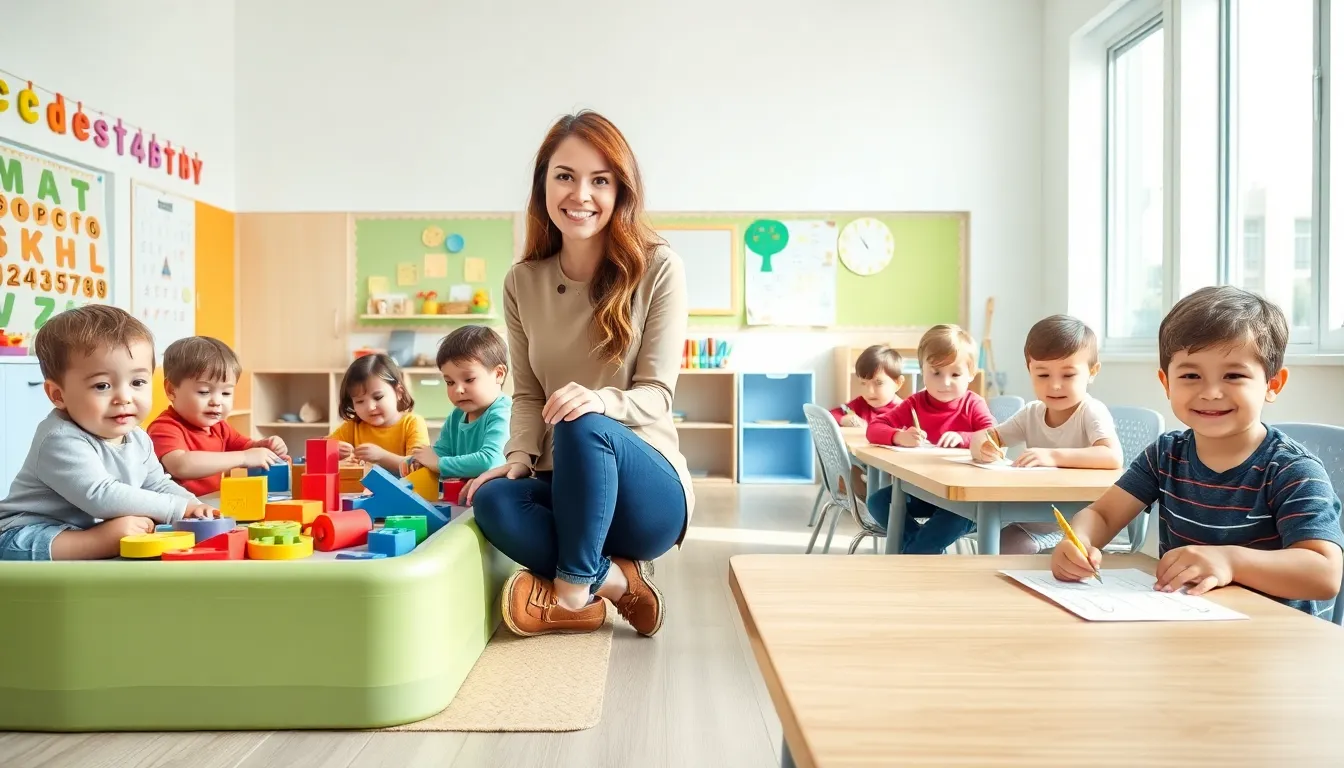
These cognitive differences mean preschoolers and kindergartners need different learning environments. Preschool classrooms feature play stations, sensory tables, and open exploration. Kindergarten classrooms include more desks, structured lessons, and academic materials.
Social and Emotional Development
Preschoolers vs. kindergartners show clear differences in how they interact with others and manage emotions. Social and emotional growth during early childhood sets the foundation for future relationships and mental health.
Preschoolers engage in parallel play, they play alongside other children rather than with them. They’re learning to share, though sharing remains difficult. Tantrums are common because preschoolers lack the emotional vocabulary and regulation skills to express frustration appropriately. They need adult help to resolve conflicts.
Kindergartners participate in cooperative play. They can plan games together, take turns, and follow rules. They’ve developed more emotional control and can often calm themselves down after minor upsets. Kindergartners understand others have different feelings and perspectives, a skill called theory of mind that emerges around age 4.
Key social-emotional milestones for preschoolers include:
- Learning to take turns (with reminders)
- Showing affection for friends
- Understanding “mine” and “yours”
- Expressing basic emotions like happy, sad, and mad
Kindergartners typically demonstrate:
- Following classroom rules independently
- Cooperating in group activities
- Showing empathy when someone is hurt
- Managing disappointment without major meltdowns
- Making and keeping friends
Preschoolers vs. kindergartners also differ in their attachment needs. Preschoolers cling more to caregivers and may show separation anxiety. Kindergartners feel more secure and can handle being away from parents for a full school day.
Physical Milestones and Motor Skills
Physical development progresses rapidly between preschool and kindergarten. Both gross motor skills (large movements) and fine motor skills (small, precise movements) advance significantly.
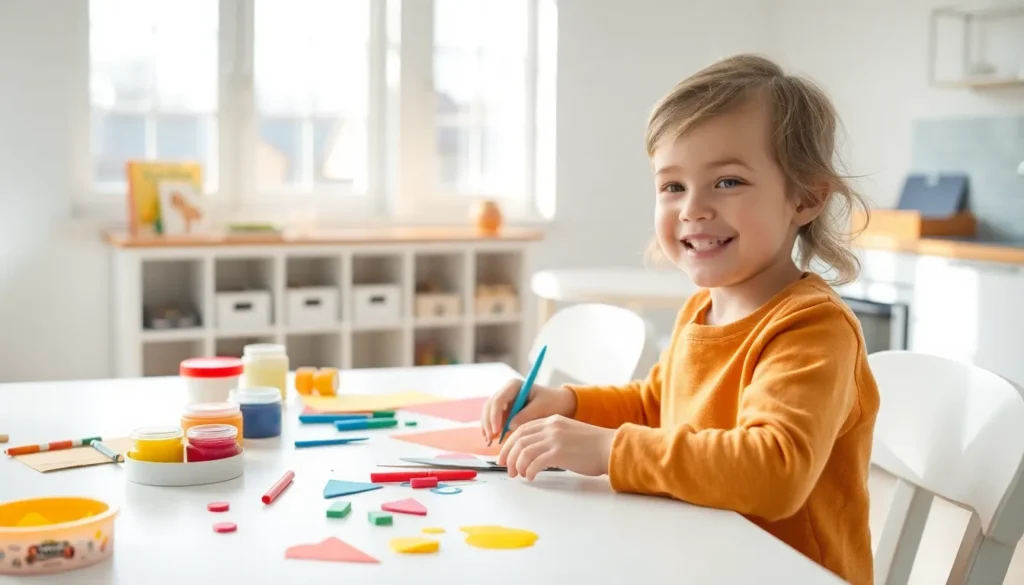
Preschoolers are still developing basic coordination. They can run, jump, and climb, but their movements lack precision. A 3-year-old might stumble often, struggle to catch a ball, or have difficulty pedaling a tricycle. Fine motor skills are emerging, they can hold a crayon in a fist grip, stack blocks, and turn pages in a book.
Kindergartners move with more control and confidence. They hop on one foot, skip, and throw with accuracy. Their fine motor skills have improved enough to hold a pencil correctly, cut with scissors along a line, and draw recognizable shapes and figures.
Here’s a comparison of preschoolers vs. kindergartners in physical development:
| Skill Area | Preschoolers (Ages 2-4) | Kindergartners (Ages 5-6) |
|---|---|---|
| Running | Run with some falls | Run smoothly, change direction easily |
| Jumping | Jump with both feet | Hop on one foot, skip |
| Catching | Catch large balls with body | Catch smaller balls with hands |
| Drawing | Scribbles, basic shapes | Letters, detailed pictures |
| Cutting | Snip paper randomly | Cut along lines |
| Writing | Imitate strokes | Write letters and name |
These physical differences matter for classroom activities. Preschool activities involve large movements and chunky materials. Kindergarten requires more fine motor work, writing, cutting, and manipulating smaller objects.
Sleep needs also differ. Preschoolers need 10 to 13 hours of sleep, often including a nap. Kindergartners need 9 to 12 hours and usually don’t nap during the day.
Choosing the Right Program for Your Child
Understanding preschoolers vs. kindergartners helps parents select the appropriate educational setting. The right choice depends on a child’s individual development, not just their age.
Some children are ready for kindergarten at 5. Others benefit from an extra year in preschool or a transitional kindergarten program. There’s no shame in waiting, research suggests that older kindergartners often perform better academically in later grades.
Consider these factors when deciding:
Academic Readiness
Can the child recognize letters and numbers? Do they show interest in books and learning? A child who isn’t interested in these activities might thrive with another year of play-based preschool.
Social Skills
Does the child play well with others? Can they follow group instructions? Kindergarten demands more social cooperation than preschool.
Emotional Maturity
Can the child handle frustration? Will they cope with a longer school day? Kindergarten brings more academic pressure and fewer nap times.
Physical Development
Can the child hold a pencil, use scissors, and manage bathroom needs independently? These skills matter for kindergarten success.
Talk to your child’s preschool teachers. They observe your child daily and can offer valuable insight. Many schools also offer kindergarten readiness assessments.
Preschoolers vs. kindergartners represent different developmental stages. Matching a child to the right program supports their growth and builds confidence. A child placed in a program too advanced for their development may struggle and develop negative feelings about school.