
Table of Contents
TogglePreschoolers experience rapid growth between ages three and five. This stage shapes how children think, feel, and connect with others. Parents and caregivers play a critical role during these formative years. Understanding what happens during preschool development helps adults support children effectively.
This guide covers the key milestones, social-emotional growth, cognitive readiness, and practical strategies for helping preschoolers thrive. Whether a child attends preschool or learns at home, these insights apply to every family.
Key Takeaways
- Preschoolers (ages 3–5) experience rapid physical, language, and cognitive growth that shapes their future learning and social skills.
- Language development explodes during preschool years, with vocabulary growing from around 200 words at age three to over 2,000 words by age five.
- Social-emotional skills like sharing, empathy, and emotional regulation develop through guided practice and adult modeling.
- Play-based learning is the most effective way for preschoolers to build cognitive, motor, and problem-solving abilities.
- Consistent routines, language-rich environments, and opportunities for independence help preschoolers thrive at home.
- Every child develops at their own pace—consult a pediatrician if you have concerns about developmental milestones.
Understanding Preschool Age and Key Milestones
Preschoolers fall between three and five years old. During this window, children hit several physical, language, and motor skill milestones.
Physical Development
Most preschoolers gain about four to five pounds per year. They grow taller by two to three inches annually. Gross motor skills improve rapidly, children learn to hop, skip, and climb with greater coordination. Fine motor skills also advance. Preschoolers can hold crayons, use scissors, and button their shirts.
Language Milestones
Vocabulary expands significantly during the preschool years. A three-year-old typically knows 200 to 1,000 words. By age five, that number often reaches 2,000 words or more. Preschoolers start forming complete sentences. They ask “why” questions constantly. They understand basic grammar rules and can follow two- or three-step instructions.
Self-Care Skills
Preschoolers become more independent with daily tasks. They learn to dress themselves, wash their hands, and use the toilet consistently. Many preschoolers can brush their teeth with supervision. These self-care skills build confidence and prepare children for kindergarten.
Every child develops at their own pace. Some preschoolers reach milestones early, while others take more time. Pediatricians can help identify any developmental delays that need attention.
Social and Emotional Development in Preschoolers
Social and emotional growth defines much of the preschool experience. Preschoolers learn to share, take turns, and manage their feelings during these years.
Building Friendships
Preschoolers move from parallel play to cooperative play. Instead of playing beside other children, they start playing with them. Friendships become important. Children this age prefer certain playmates and may talk about “best friends.” They learn to negotiate, compromise, and resolve conflicts, though they still need adult guidance.
Emotional Regulation
Emotions run high for preschoolers. They experience joy, anger, frustration, and sadness intensely. Learning to regulate these emotions takes time and practice. Tantrums are normal at the start of the preschool years but typically decrease by age five.
Adults can help preschoolers by naming emotions. Saying “You seem frustrated because the blocks fell down” teaches children to identify what they feel. This awareness is the first step toward managing emotions.
Empathy Development
Preschoolers begin showing empathy. They notice when others feel sad or hurt. A four-year-old might comfort a crying friend or offer a toy to cheer someone up. This empathy grows through modeling. When adults show kindness and concern, preschoolers learn to do the same.
Independence and Identity
Preschoolers develop a stronger sense of self. They express preferences clearly, favorite colors, foods, and activities. They want to do things “by myself” more often. This push for independence is healthy and should be encouraged within safe boundaries.
Cognitive Growth and Learning Readiness
Cognitive development accelerates during the preschool years. Preschoolers become curious learners who ask questions and explore their environment.
Pre-Reading Skills
Preschoolers develop phonological awareness. They recognize rhymes, identify beginning sounds, and understand that letters represent sounds. Many preschoolers learn to recognize their own name in print. Some begin identifying letters and numbers. Reading aloud to preschoolers daily builds vocabulary and comprehension skills.
Mathematical Thinking
Basic math concepts emerge during preschool. Children learn to count objects, recognize patterns, and sort items by color, shape, or size. Preschoolers understand concepts like “more” and “less.” They grasp basic spatial terms such as “under,” “above,” and “beside.”
Problem-Solving Abilities
Preschoolers become better problem-solvers. They can complete simple puzzles, build structures with blocks, and figure out how toys work. Trial and error becomes a learning strategy. When something doesn’t work, preschoolers try different approaches.
Attention and Memory
Attention span increases throughout the preschool years. A three-year-old might focus for five to ten minutes on a task. By age five, that span extends to fifteen minutes or longer. Memory also improves. Preschoolers remember stories, songs, and events from the past.
Imagination and Creativity
Imaginative play peaks during preschool. Children create elaborate pretend scenarios. They become superheroes, doctors, parents, and animals. This imaginative play supports cognitive growth by helping preschoolers process experiences and practice social roles.
Supporting Your Preschooler at Home
Parents and caregivers have many opportunities to support preschoolers at home. Simple daily activities promote development across all areas.
Create a Language-Rich Environment
Talk with preschoolers throughout the day. Describe what you’re doing while cooking or cleaning. Ask open-ended questions that require more than yes or no answers. Read books together daily, let children pick favorites even if you’ve read them dozens of times.
Encourage Play-Based Learning
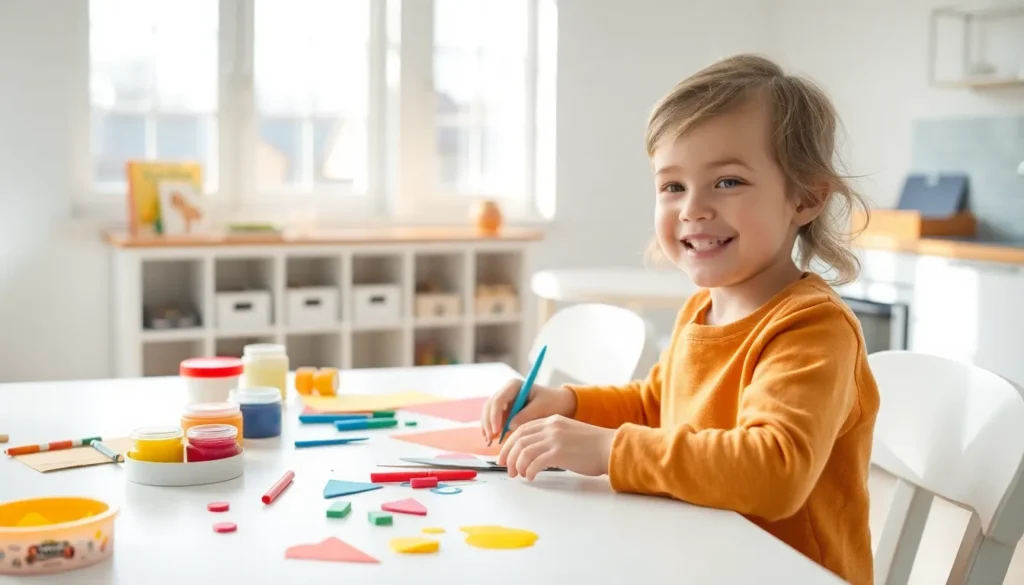
Play is how preschoolers learn best. Provide blocks, art supplies, puzzles, and dress-up clothes. Outdoor play builds gross motor skills and burns energy. Limit screen time and prioritize hands-on activities.
Establish Consistent Routines
Preschoolers thrive with predictable schedules. Consistent wake times, mealtimes, and bedtimes provide security. Routines also teach time concepts and help children transition between activities more smoothly.
Practice Social Skills
Arrange playdates so preschoolers can practice sharing and cooperating. Role-play social situations at home. Talk through conflicts and brainstorm solutions together.
Foster Independence
Give preschoolers age-appropriate responsibilities. They can help set the table, water plants, or put toys away. Offer choices when possible, “Do you want the red cup or the blue cup?” These small decisions build confidence.
Stay Patient with Emotional Outbursts
Preschoolers are still learning emotional control. When tantrums happen, stay calm. Validate feelings first, then redirect behavior. Avoid shaming or punishing emotions themselves.