Table of Contents
TogglePreschoolers examples show how children between ages 3 and 5 grow across multiple areas. This stage marks a critical period for brain development, social learning, and physical coordination. Parents and educators often look for clear signs that a child is progressing on track.
This article breaks down specific preschoolers examples across five key developmental areas. Each section offers practical illustrations that caregivers can observe in everyday settings. These examples help adults recognize milestones and support healthy growth during these formative years.
Key Takeaways
- Preschoolers examples span five key developmental areas: cognitive, social-emotional, physical, and language skills between ages 3 and 5.
- Cognitive milestones include counting to 10-20, recalling past events, solving puzzles, and engaging in imaginative pretend play.
- Social and emotional development shows through cooperative play, recognizing emotions in others, and expressing feelings with words instead of actions.
- Physical development includes gross motor skills like running and jumping, plus fine motor skills like holding crayons and cutting with scissors.
- Language skills grow rapidly—preschoolers expand from about 1,000 words at age 3 to over 2,000 words by age 5.
- Observing these preschoolers examples helps parents and educators recognize healthy milestones and support each child’s unique developmental pace.
What Defines the Preschool Age Range
The preschool age typically spans from 3 to 5 years old. Some programs accept children as young as 2.5 years, while others focus on the year before kindergarten. This window represents a unique developmental phase.
During these years, children transition from toddlerhood into more structured learning environments. They begin to think more logically, express emotions with words, and play cooperatively with peers. The brain develops rapidly, forming about one million neural connections every second during early childhood.
Preschoolers examples at this age include asking “why” questions constantly, pretending to be firefighters or doctors, and learning to share toys. These behaviors signal healthy development. Each child moves at their own pace, but general patterns emerge across this age group.
Most preschoolers attend some form of early education program. According to the National Center for Education Statistics, about 54% of 3- and 4-year-olds in the U.S. are enrolled in preschool programs. These settings provide structured opportunities for growth across all developmental domains.
Examples of Cognitive Development in Preschoolers
Cognitive development refers to how children think, learn, and solve problems. Preschoolers examples in this area show rapid mental growth.
Memory and Recall
Preschoolers start remembering events from days or weeks ago. A 4-year-old might recall a trip to the zoo and describe the animals they saw. They can follow two- or three-step instructions like “Pick up your toys, wash your hands, and come to dinner.”
Counting and Numbers
Most preschoolers learn to count objects up to 10 or 20. They begin to understand that numbers represent quantities. A child might count five crackers on their plate or recognize that three blocks are fewer than seven blocks.
Problem-Solving
Preschoolers examples of problem-solving include figuring out how puzzle pieces fit together or building a tower that won’t fall down. They experiment with cause and effect, pushing a button to see what happens or mixing paint colors to create new shades.
Imaginative Play
Pretend play explodes during the preschool years. Children create elaborate scenarios with dolls, action figures, or imaginary friends. This type of play builds cognitive flexibility and abstract thinking skills. A child might pretend a cardboard box is a spaceship or a restaurant kitchen.
Social and Emotional Milestones
Social and emotional growth shapes how preschoolers interact with others and manage their feelings. These skills matter as much as academic readiness for school success.
Cooperative Play
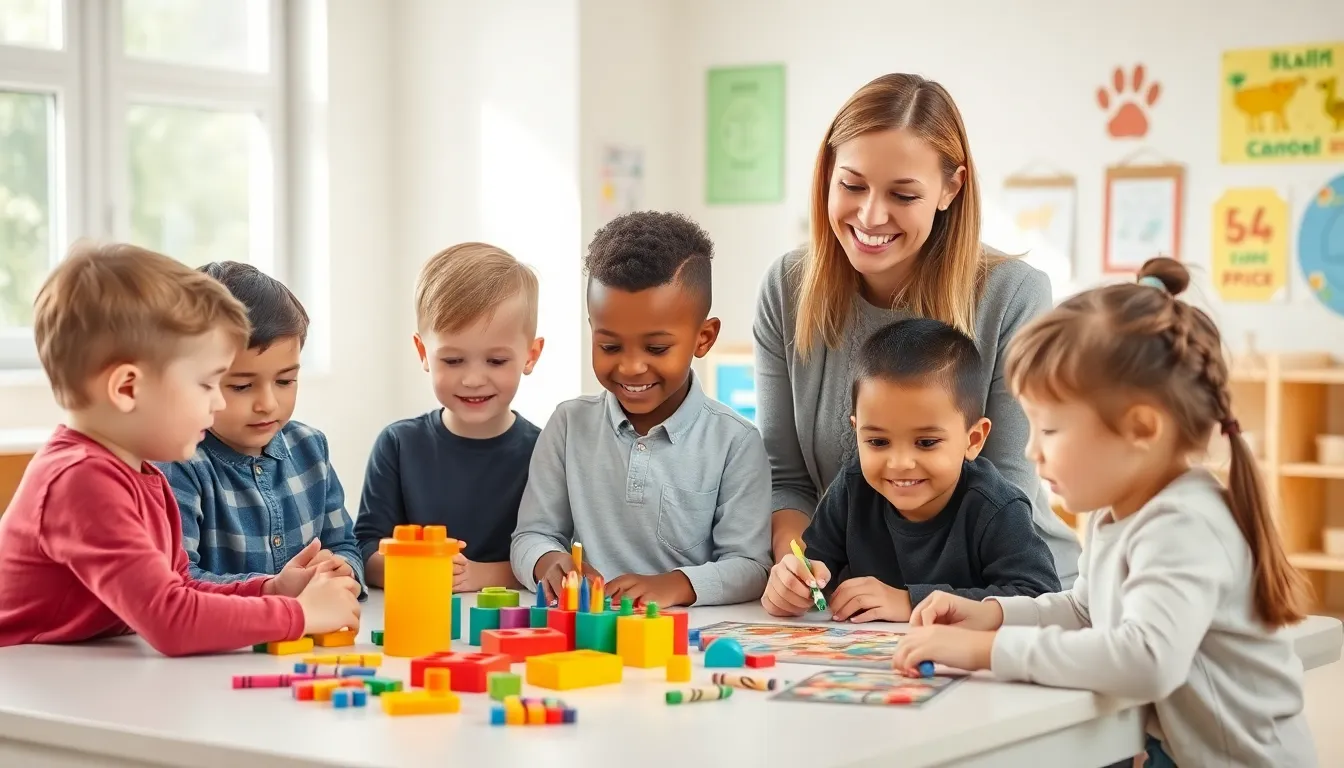
Preschoolers examples of social development include playing games with rules, taking turns, and working together on projects. A group of 4-year-olds might build a sandcastle together, each child contributing to different parts. They begin to negotiate, “You be the mommy and I’ll be the baby.”
Empathy Development
Children at this age start recognizing emotions in others. They might comfort a crying friend with a hug or ask “Are you sad?” when they notice someone frowning. This emotional awareness grows throughout the preschool years.
Managing Emotions
Preschoolers learn to express feelings with words instead of actions. Instead of hitting when frustrated, a 5-year-old might say “I’m mad because you took my toy.” They still need adult support, but they’re building self-regulation skills.
Independence
Preschoolers examples of growing independence include choosing their own clothes, attempting to dress themselves, and wanting to do tasks “by myself.” They take pride in accomplishments like pouring their own juice or putting on shoes without help.
Physical Development Examples
Physical development covers both gross motor skills (large movements) and fine motor skills (small, precise movements). Preschoolers make significant gains in both areas.
Gross Motor Skills
Preschoolers examples of gross motor development include running without falling, jumping with both feet, climbing playground equipment, and riding tricycles. By age 5, most children can skip, hop on one foot, and catch a bounced ball.
These skills require coordination, balance, and muscle strength. Active play supports physical development, children need at least 60 minutes of physical activity daily.
Fine Motor Skills
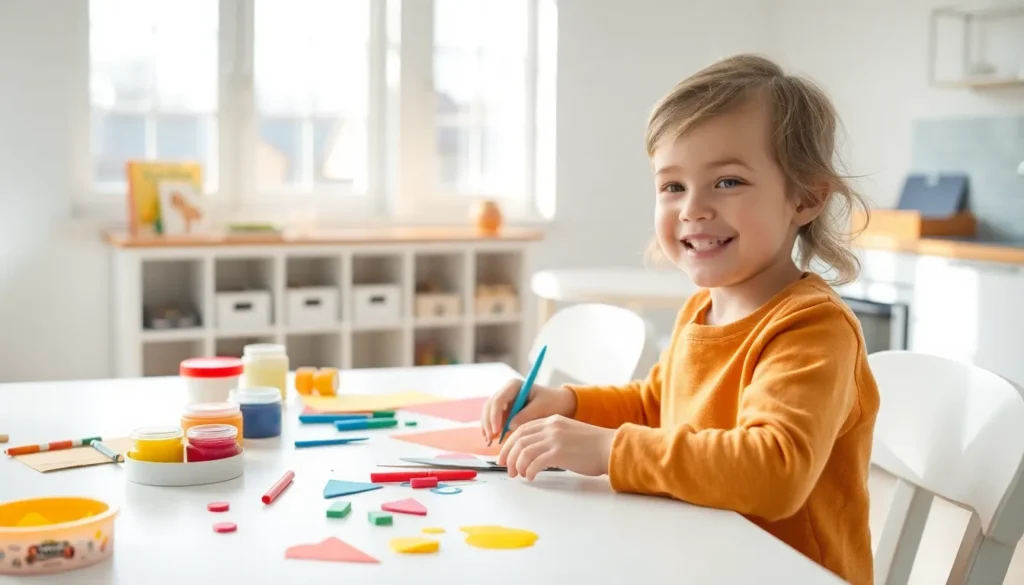
Fine motor development shows up in activities like holding crayons, cutting with scissors, and buttoning shirts. Preschoolers progress from scribbling to drawing recognizable shapes and eventually writing some letters.
A 3-year-old might hold a crayon with their whole fist. By age 5, they typically use a tripod grip (thumb and two fingers) for better control. Threading beads, building with small blocks, and playing with playdough all strengthen fine motor abilities.
Self-Care Abilities
Physical development enables self-care tasks. Preschoolers examples include feeding themselves with utensils, brushing teeth with supervision, and using the bathroom independently. These skills build confidence and prepare children for school routines.
Language and Communication Skills
Language development accelerates dramatically during the preschool years. Children move from simple sentences to complex conversations.
Vocabulary Growth
Preschoolers learn new words at an impressive rate. A typical 3-year-old knows about 1,000 words. By age 5, that number jumps to 2,000 or more. They pick up words from conversations, books, and everyday experiences.
Preschoolers examples of vocabulary use include describing objects with multiple adjectives (“the big, red, bouncy ball”) and using new words in context after hearing them just once or twice.
Sentence Structure
Language becomes more grammatically correct over time. Three-year-olds speak in three- to four-word sentences. By age 5, children form complete sentences with correct tense and pronouns. They might say “Yesterday we went to grandma’s house and she gave us cookies.”
Asking Questions
Preschoolers ask endless questions. “Why is the sky blue?” “Where do birds sleep?” “How does the car go?” These questions show curiosity and growing understanding of how the world works. Adults who answer patiently support language and cognitive development.
Storytelling
Preschoolers examples of communication include telling stories about their day, recounting events from memory, and creating fictional narratives. They might not get every detail right, but they understand story structure, beginning, middle, and end.