Table of Contents
ToggleFinding fresh preschooler ideas can feel like a daily puzzle. Parents and caregivers know the challenge: keeping three- to five-year-olds busy, happy, and learning, all at once. The good news? It doesn’t require expensive toys or complicated setups. Simple activities can spark creativity, build motor skills, and teach early concepts. This guide shares practical preschooler ideas across arts, play, outdoor fun, science, and quiet time. Each activity suits short attention spans and curious minds. Whether planning a rainy afternoon or a full week of learning, these ideas offer something for every mood and moment.
Key Takeaways
- Simple preschooler ideas like paper plate crafts, sorting games, and sensory bins spark creativity without expensive toys or complicated setups.
- Arts and crafts activities focus on process over product, helping preschoolers develop fine motor skills while expressing themselves freely.
- Play-based learning through pretend play stations, puzzles, and letter hunts teaches early math, language, and problem-solving skills naturally.
- Outdoor preschooler ideas like nature scavenger hunts and obstacle courses burn energy while building gross motor skills and observation abilities.
- Simple science experiments such as baking soda volcanoes and sink-or-float tests satisfy curious minds and introduce basic scientific concepts.
- Quiet time activities including audiobooks, sticker books, and sensory bins help preschoolers wind down while developing focus and independence.
Creative Arts and Crafts Activities
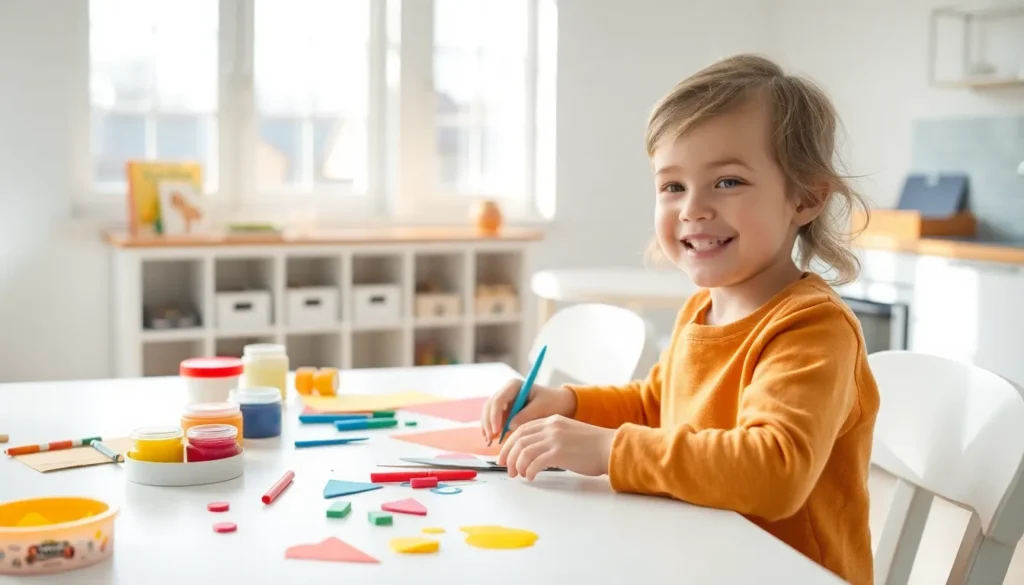
Arts and crafts give preschoolers a chance to express themselves while developing fine motor skills. These preschooler ideas focus on process over product, meaning the mess and exploration matter more than a perfect result.
Paper Plate Animals
Paper plates transform into lions, fish, or owls with just paint, markers, and some glue. Children practice cutting (with safety scissors), color recognition, and following simple steps. This activity works well for themed weeks or storytelling sessions.
Finger Painting Stations
Set up a table with washable paints and large sheets of paper. Finger painting lets preschoolers feel textures and mix colors freely. It’s sensory play and art combined. Pro tip: tape paper to the table so it doesn’t slide around.
Collage Making
Gather old magazines, fabric scraps, buttons, and dried pasta. Children glue items onto cardboard to create their own designs. Collage-making builds decision-making skills and introduces concepts like texture and pattern.
Playdough Creations
Homemade or store-bought playdough offers endless possibilities. Preschoolers can roll, shape, and cut dough into animals, food, or abstract forms. Add cookie cutters, plastic knives, and rolling pins for extra fun. This activity strengthens hand muscles needed for writing later.
Learning Through Play
Play is how preschoolers understand the world. These preschooler ideas blend education with entertainment so children learn without realizing they’re learning.
Sorting Games
Use buttons, colored pompoms, or toy animals for sorting activities. Ask children to group items by color, size, or type. Sorting builds early math skills like classification and counting. Muffin tins or egg cartons make great sorting trays.
Pretend Play Stations
Set up a play kitchen, doctor’s office, or grocery store. Pretend play develops language, social skills, and imagination. Children practice real-life scenarios in a safe space. Rotate themes every few weeks to keep interest high.
Puzzle Time
Start with simple puzzles featuring large pieces and familiar images. Puzzles teach problem-solving, spatial awareness, and patience. As children master easier puzzles, gradually introduce ones with more pieces.
Letter and Number Hunts
Hide foam letters or magnetic numbers around a room. Ask preschoolers to find specific ones and bring them back. This turns alphabet and number recognition into a treasure hunt. Add movement by having children hop or crawl to each hiding spot.
Building Blocks
Wooden blocks, LEGO DUPLO, or magnetic tiles let preschoolers create towers, bridges, and houses. Building activities teach balance, gravity, and cause-and-effect. They also encourage cooperative play when children build together.
Outdoor Exploration and Physical Activities
Preschoolers have energy to burn. Outdoor preschooler ideas help children develop gross motor skills while connecting with nature.
Nature Scavenger Hunts
Create a simple picture list: a leaf, a rock, a flower, a stick. Children search the yard or park to find each item. Scavenger hunts build observation skills and get kids moving. Bring a bag for collecting treasures.
Sidewalk Chalk Art
Chalk transforms driveways into canvases. Preschoolers can draw pictures, trace their shadows, or practice writing letters. Try adding water with a spray bottle, wet chalk creates brighter colors and a different texture.
Obstacle Courses
Set up cones, hula hoops, and jump ropes in the backyard. Children crawl under tables, hop through hoops, and balance on lines. Obstacle courses build coordination, following directions, and confidence.
Bug Watching
Give children a magnifying glass and let them observe ants, ladybugs, or worms. Bug watching introduces basic science concepts and respect for living things. Keep a simple nature journal where children can draw what they see.
Water Play
Fill bins with water and add cups, funnels, and toy boats. Water play teaches volume, pouring, and cause-and-effect. On hot days, add sprinklers for extra cooling fun.
Simple Science Experiments for Curious Minds
Preschoolers ask “why” constantly, and that curiosity makes them natural scientists. These preschooler ideas introduce basic science through hands-on experiments.
Baking Soda Volcanoes
This classic never gets old. Place baking soda in a container, add vinegar, and watch the fizzy eruption. Children learn about chemical reactions in the most exciting way. Add food coloring for a colorful twist.
Sink or Float Tests
Gather household items: a cork, a rock, a spoon, a leaf. Fill a basin with water and have children predict which objects sink or float. Then test each one. This experiment teaches density and observation skills.
Rainbow Walking Water
Place cups of colored water in a row with empty cups between them. Drape paper towels from full cups to empty ones. Over a few hours, water “walks” up the towels and mixes colors in the empty cups. Preschoolers see absorption and color mixing in action.
Magnet Exploration
Give children a magnet and let them test objects around the house. What sticks? What doesn’t? This activity introduces magnetic forces and encourages prediction skills.
Quiet Time and Independent Play Ideas
Every preschooler needs downtime. These preschooler ideas encourage calm, focused activities that children can do on their own or with minimal supervision.
Audiobooks and Music
Play audiobooks or children’s music while preschoolers rest or draw. Listening builds vocabulary and attention span. Many libraries offer free audiobook apps for families.
Sticker Books
Sticker books keep little hands busy and develop fine motor control. Choose books with scenes where children place stickers to complete pictures. This quiet activity works well before nap time.
Sensory Bins
Fill a bin with rice, dried beans, or kinetic sand. Add scoops, small toys, and containers. Sensory bins calm busy minds while encouraging tactile exploration. Supervision is needed for younger preschoolers who still put things in their mouths.
Simple Lacing Cards
Lacing cards help preschoolers practice hand-eye coordination and patience. They thread a string through holes in cardboard shapes. Start with large holes and thick laces, then progress to smaller ones.
Looking at Books
Even before reading, preschoolers benefit from page-turning and picture-gazing. Keep a basket of board books and picture books within reach. Independent book time builds a love of reading and gives caregivers a moment to breathe.